
Saturday 24 October, in 57 places
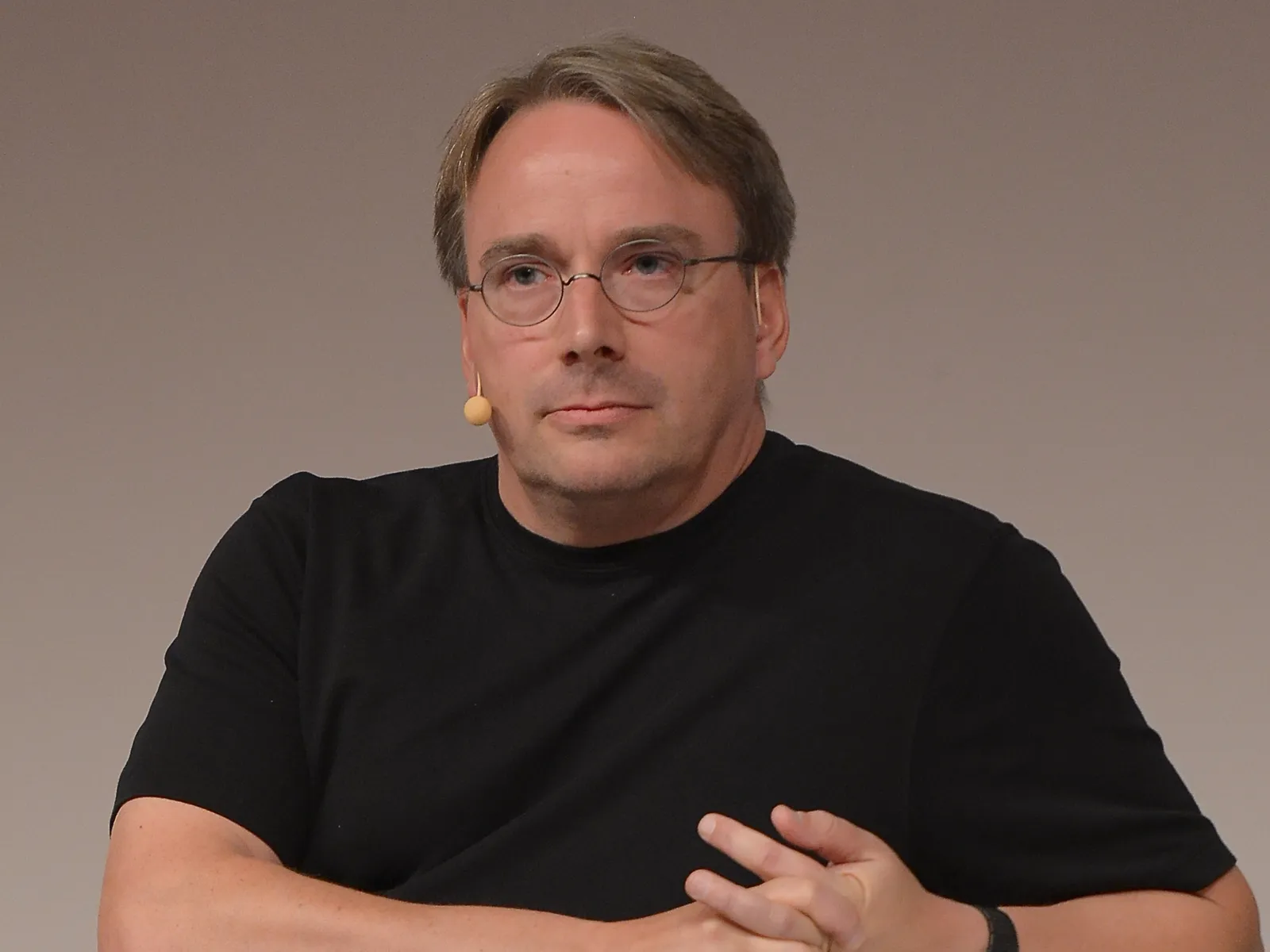
Sunday 25 August 1991, three minutes to midnight, Helsinki time. Linus Torvalds, 21, a student at the city's university, sends a message to the comp.os.minix discussion group under a modest subject line: "What would you like to see most in minix?". He explains that he is writing an operating system for PCs with a 386 processor, that he has been working on it since April and that he has managed to get the bash shell and the gcc compiler running on it. He asks for suggestions, promising nothing.1
Hello everybody out there using minix - I'm doing a (free) operating system (just a hobby, won't be big and professional like gnu) for 386(486) AT clones.
Linus Torvalds, comp.os.minix, 25 August 1991
Thirty-five years later that hobby is inside Android phones, in the servers that carry much of the web, in all 500 of the world's most powerful supercomputers, in televisions and cars, and it has flown on Mars. On Saturday 24 October 2026 Italy celebrates it with Linux Day, the national free software day: the twenty-sixth edition, in 57 venues, from the Politecnico di Milano to Sulmona, with free entry almost everywhere.2 The Italian Linux Society coordinates it; volunteers from the LUGs, the Linux User Groups, put it together with talks, workshops and stalls where Linux gets installed on the computers of anyone who drops by.
This special explains what Linux is to people who have never heard of it, with some extra detail for those who work with it: where it comes from, where it is found, who writes it, what public administrations do with it, and what happens at a Linux Day. At the end I say what I think and how to get started.
What Linux is, from the beginning
On its own, a computer is a set of circuits. The operating system is the program that makes it work: it decides which application gets the processor and for how long, manages memory, and talks to the disk, keyboard, screen and network. Windows, macOS, Android and iOS are operating systems.
The core of an operating system is called the kernel. Strictly speaking, Linux is exactly that. To use it you need many other programs around it: the graphical interface, the terminal where commands are typed, the browser, the tools for installing applications. Whoever puts the kernel together with everything else, tests it and ships it creates a distribution: Debian, Ubuntu, Fedora and Linux Mint are distributions. Android uses the Linux kernel too, with a very different system on top.
Linux is free software. For the Free Software Foundation a program is free if it guarantees four freedoms: to run it for any purpose, to study how it works and change it, to redistribute copies, and to distribute your own modified versions. Studying it requires the source code, the program written in the form people read. Free does not mean free of charge, and the Free Software Foundation puts it like this: you should think of "free" as in "free speech", not as in "free beer".3
The Linux licence, the GPL, turns these freedoms into a contract. Anyone who receives a program under the GPL can use, study and change it as they like, but if they distribute a modified version they must do so under the same licence and with the code. It is called copyleft: copyright used to keep code open rather than to lock it up. In February 1998 a group meeting in Palo Alto chose a label meant for businesses, "open source", suggested by Christine Peterson.4 The two terms almost always describe the same programs; free software puts people's freedom first, open source the advantages of an open way of developing.
Before Linux: Unix, BSD, GNU and Minix
The story begins in 1969 at Bell Labs, the research centre of the American telephone company AT&T. Ken Thompson found a little-used PDP-7 minicomputer and, with Dennis Ritchie, wrote a small, elegant operating system on it: Unix. From 1971 Ritchie worked on a new language, C, and in 1973 the Unix kernel was rewritten in C. That was the turning point: a system written in a high-level language could be moved from one computer to another.5
Unix soon reached universities, together with its source code. At Berkeley, in California, a group of students led by Bill Joy began improving it, and in March 1978 the first Berkeley Software Distribution, BSD, came out.6 The BSD family gave rise to FreeBSD and to the core of macOS.
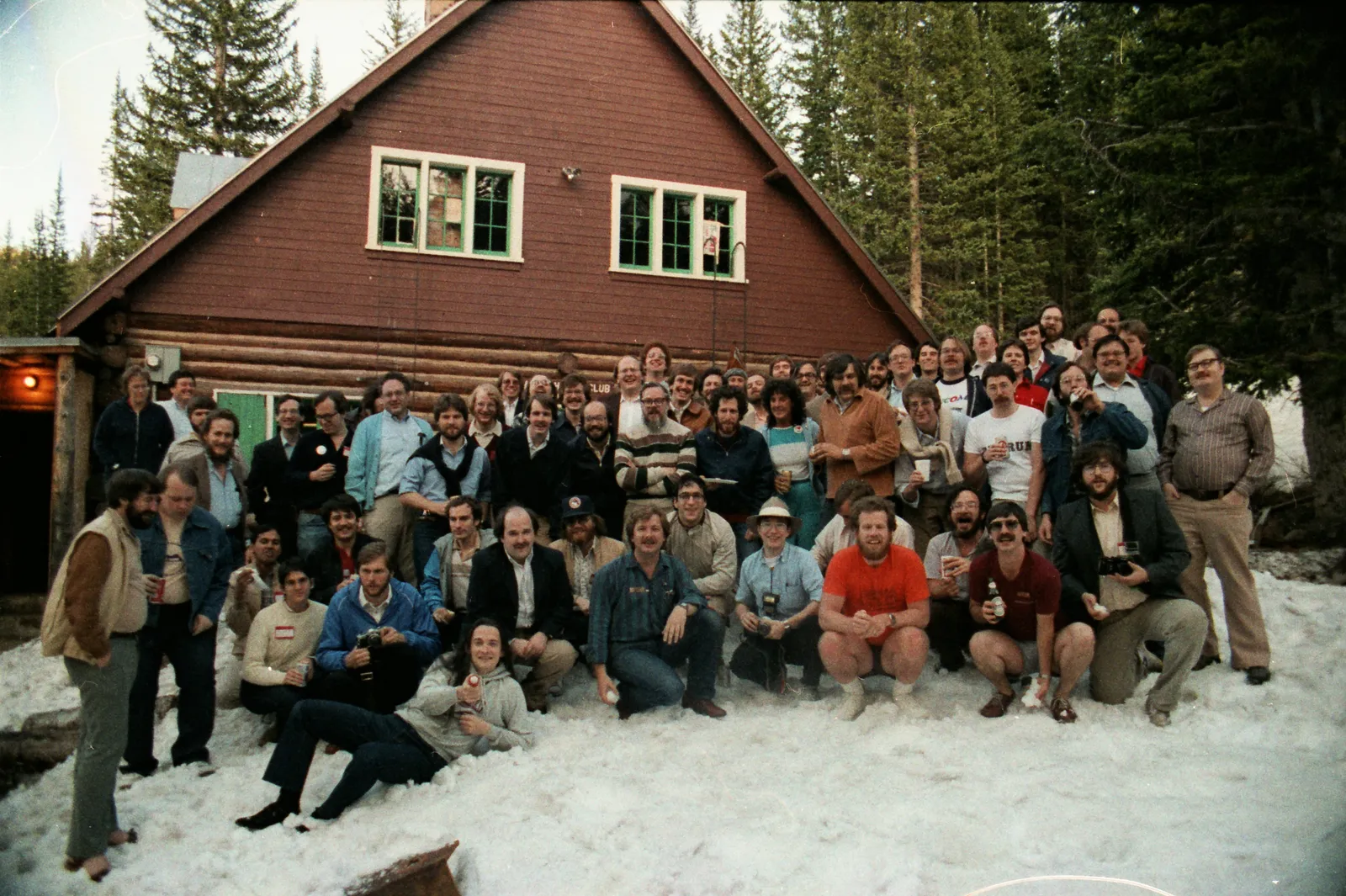
By the 1980s Unix had become mostly a commercial product, with paid licences. On 27 September 1983 Richard Stallman, a programmer at MIT, answered with an announcement.
Starting this Thanksgiving I am going to write a complete Unix-compatible software system called GNU (for Gnu's Not Unix), and give it away free to everyone who can use it.
Richard Stallman, announcement of the GNU project, 27 September 1983
Work began in January 1984.3 In the following years GNU produced compilers, editors, libraries and command-line tools, and in February 1989 the first version of the GPL.7 The kernel was missing; it was not ready.
In 1987 Andrew Tanenbaum, a professor in Amsterdam, published Minix, a small Unix-like system designed to teach how an operating system works, distributed with his textbook.8 Students all over the world used it to learn. One of them was in Helsinki.
From a hobby to the world: the milestones of Linux
The first version, 0.01, was published on 17 September 1991.8 On 5 October Torvalds released the sources of version 0.02, noting that they contained no Minix code.1 On 29 January 1992 Tanenbaum posted a message to comp.os.minix titled "LINUX is obsolete": a monolithic kernel, all in one block, was in his view "a giant step back into the 1970s". Torvalds replied the same day, without diplomacy: being a professor and researcher was "one hell of a good excuse" for some of Minix's flaws, and Linux still beat it "in almost all areas".9 The argument went on for weeks, but meanwhile Linux was growing with contributions from other programmers. And it had changed licence: in the notes for version 0.12 Torvalds wrote that the GPL would apply from 1 February 1992, because some people had asked him for it. Version 1.0 arrived in March 1994.10
Distributions were needed so people could install it without building everything themselves. On 17 July 1993 Patrick Volkerding announced Slackware, the oldest one still maintained.11 In August Ian Murdock, a student at Purdue University, started Debian, built by a community of volunteers.12 In Italy the first user group, Pluto, had been founded in Padua in 1992 by computer science students and lecturers, and in 1994 the Italian Linux Society was born.13 There were meetings and local install parties, and dedicated magazines such as Linux&C. appeared.
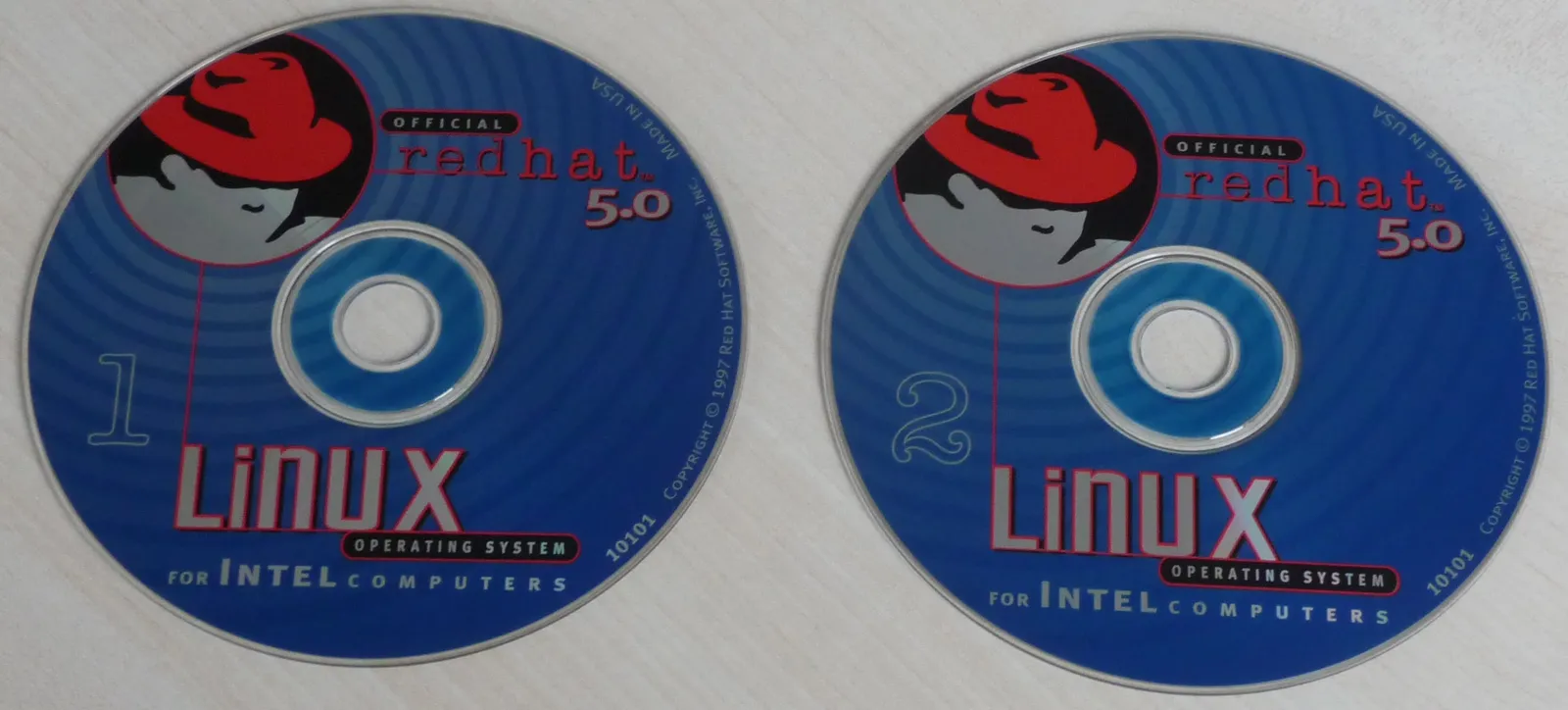
In February 1995 a group of website administrators began pooling their fixes to a web server that nobody was updating any more: Apache was born.14 With Linux and Apache, both free, anyone could set up a website without paying for licences. In the second half of the 1990s Linux also found an economy. Red Hat, founded in 1993, built a company on a system anyone could copy, and on 11 August 1999 it went public on Wall Street: its shares closed the first day at 52 dollars, one of the biggest first-day gains in the history of the American stock market up to then.15 Graphical desktops arrived too: on 14 October 1996 Matthias Ettrich announced KDE, and on 15 August 1997 Miguel de Icaza and Federico Mena started GNOME, partly because the library KDE relied on did not yet have a free licence.16 In 1996 Larry Ewing used GIMP, a free graphics program, to draw Tux the penguin.17
Big companies took sides. In December 2000 IBM's chairman, Lou Gerstner, announced nearly a billion dollars of investment in Linux for 2001.18 Six months later Microsoft's CEO, Steve Ballmer, told the Chicago Sun-Times that "Linux is a cancer that attaches itself in an intellectual property sense to everything it touches": his target was the GPL, which requires derived code to stay free.19
The rest is the story of infrastructure. In 2005, when the proprietary tool used to manage the kernel's code stopped being free of charge, Torvalds and the kernel community wrote their own, Git, now used to manage the code of a vast number of projects.20 In January 2007 the Linux Foundation was formed from the merger of two industry consortia, Open Source Development Labs and the Free Standards Group.8 In October 2008 the first Android phone, the HTC Dream, went on sale.21 On 29 February 2012 the Raspberry Pi arrived, a credit-card-sized computer created to teach young people computing: by March 2026 more than 75 million had been sold.22 On 20 October 2014 Microsoft's new CEO, Satya Nadella, spoke in front of a slide showing the word Microsoft, a heart and the word Linux, and in 2016 Windows began running Linux programs through the Windows Subsystem for Linux.23 In February 2022 Valve put the Steam Deck on sale, a handheld console running SteamOS, based on Arch Linux.24
Linux did not come from nowhere. It took the ideas of Unix, the model of Minix, the tools and licence of GNU, and made them work on a computer anyone could buy, with a new method: code published early and often, fixes proposed by anyone by email, thousands of people who had never met working on the same program.
Nothing is invented from nothing: we tame what already exists.
Second law of innovation, from Un perché alla volta (translated)
From Unix to Linux Day 2026
- 1969Ken Thompson and Dennis Ritchie create Unix at Bell Labs
- Mar 1978The first Berkeley Software Distribution comes out
- Sep 1983Richard Stallman announces the GNU project
- 1987Andrew Tanenbaum publishes Minix
- Feb 1989First version of the GPL licence
- Aug 1991Torvalds announces his system, "just a hobby"
- Jan 1992Tanenbaum: "LINUX is obsolete"
- Feb 1992Linux moves to the GPL
- Jul 1993Slackware comes out; in August Debian is born
- 1994Linux 1.0; in Italy the Italian Linux Society is born
- Oct 1996KDE is born; the same year Tux arrives
- Aug 1999Red Hat goes public on Wall Street
- Jun 2001Steve Ballmer: Linux is "a cancer"
- Dec 2001First Linux Day in Italy
- 2005Torvalds writes Git
- Oct 2008The first Android phone goes on sale
- Feb 2012The Raspberry Pi arrives
- Oct 2014Satya Nadella: Microsoft loves Linux
- Nov 2017Linux on all 500 TOP500 supercomputers
- Apr 2021The Ingenuity helicopter flies on Mars with Linux
- Feb 2022The Steam Deck comes out
- Oct 2026Linux 7.3 and the 26th Linux Day
Where Linux runs today
People who have never installed Linux still use it every day. According to StatCounter, in September 2026 Android was on 69.3% of smartphones worldwide and 63.4% in Italy; counting phones, tablets and computers together, it is the most used operating system, at 42.7% against 29% for Windows.25 As early as May 2021 Google counted more than 3 billion active Android devices.26 According to W3Techs, on 23 October 2026 63.2% of websites whose operating system is known run on Linux, against 8% for Windows.27
In supercomputers the contest is over. On the TOP500 list of November 1998 a single system used Linux, by November 2007 there were 427, and since November 2017 all 500 have. So it is in June 2026 too, with China's LineShine in first place and Eni's two supercomputers in sixth and eighth.28
TOP500 supercomputers running Linux, out of 500
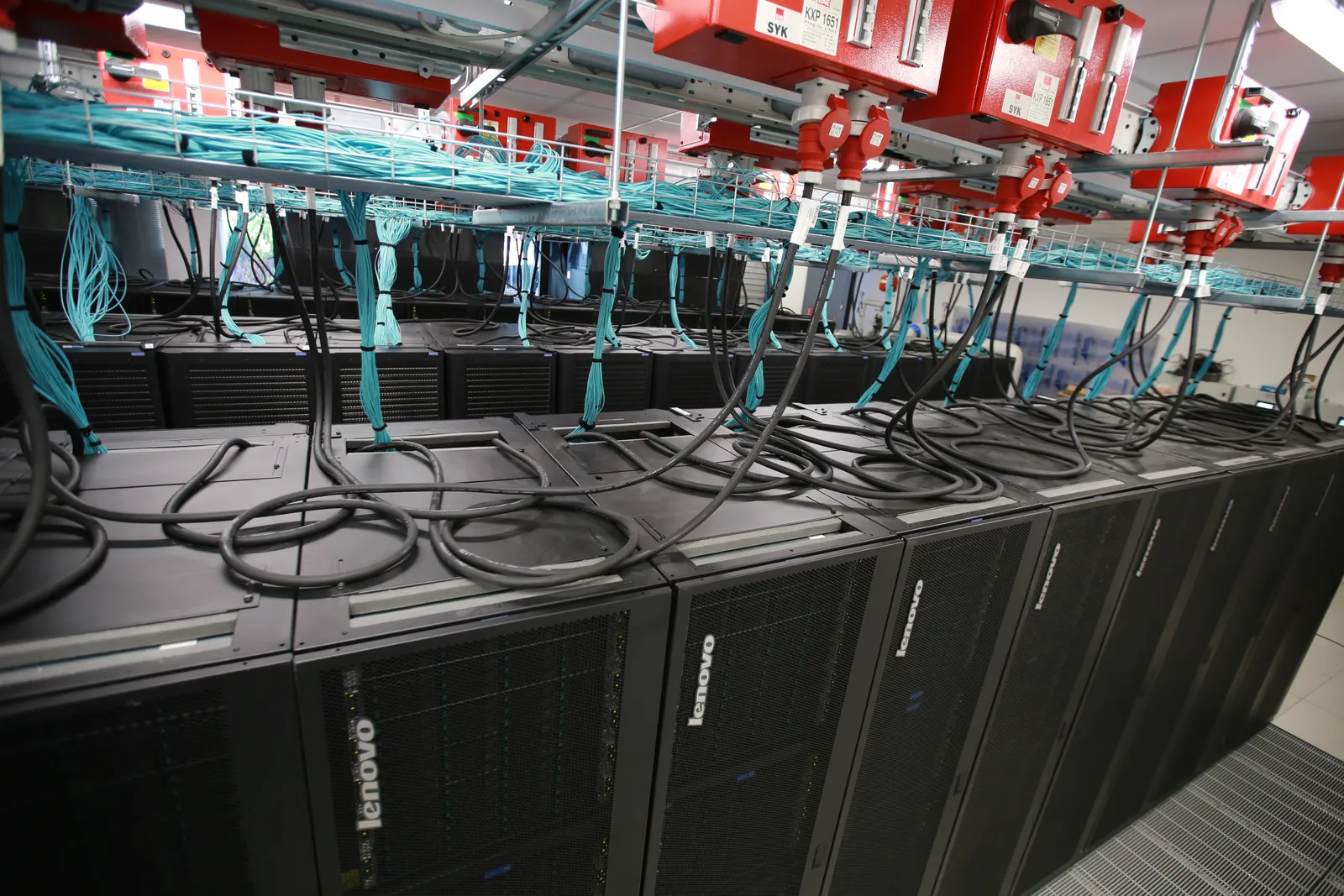
Linux is also inside a huge number of objects, because it carries no licence fees, adapts to small and large processors and can be changed without asking anyone's permission: home routers, Chromebooks, LG televisions with webOS. In cars there is Automotive Grade Linux, a Linux Foundation project with more than 100 companies; the 2018 Toyota Camry was the first Toyota with an AGL-based in-car system.29
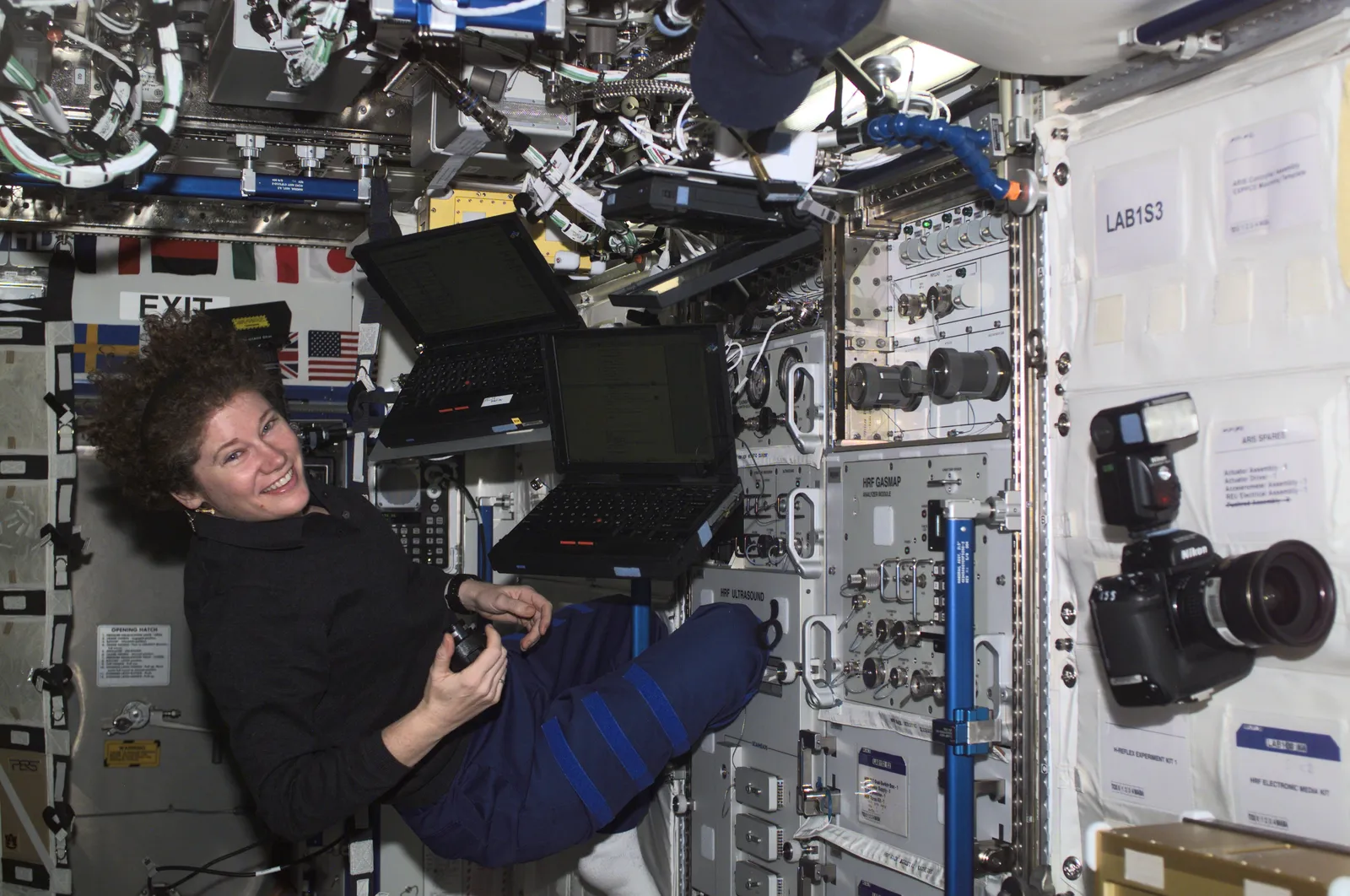
And in space. In 2013 the laptops on the International Space Station moved from Windows XP to Debian. Keith Chuvala, who led the team in charge, explained that they wanted a system that gave them "in-house control", one they could fix and adapt themselves.30
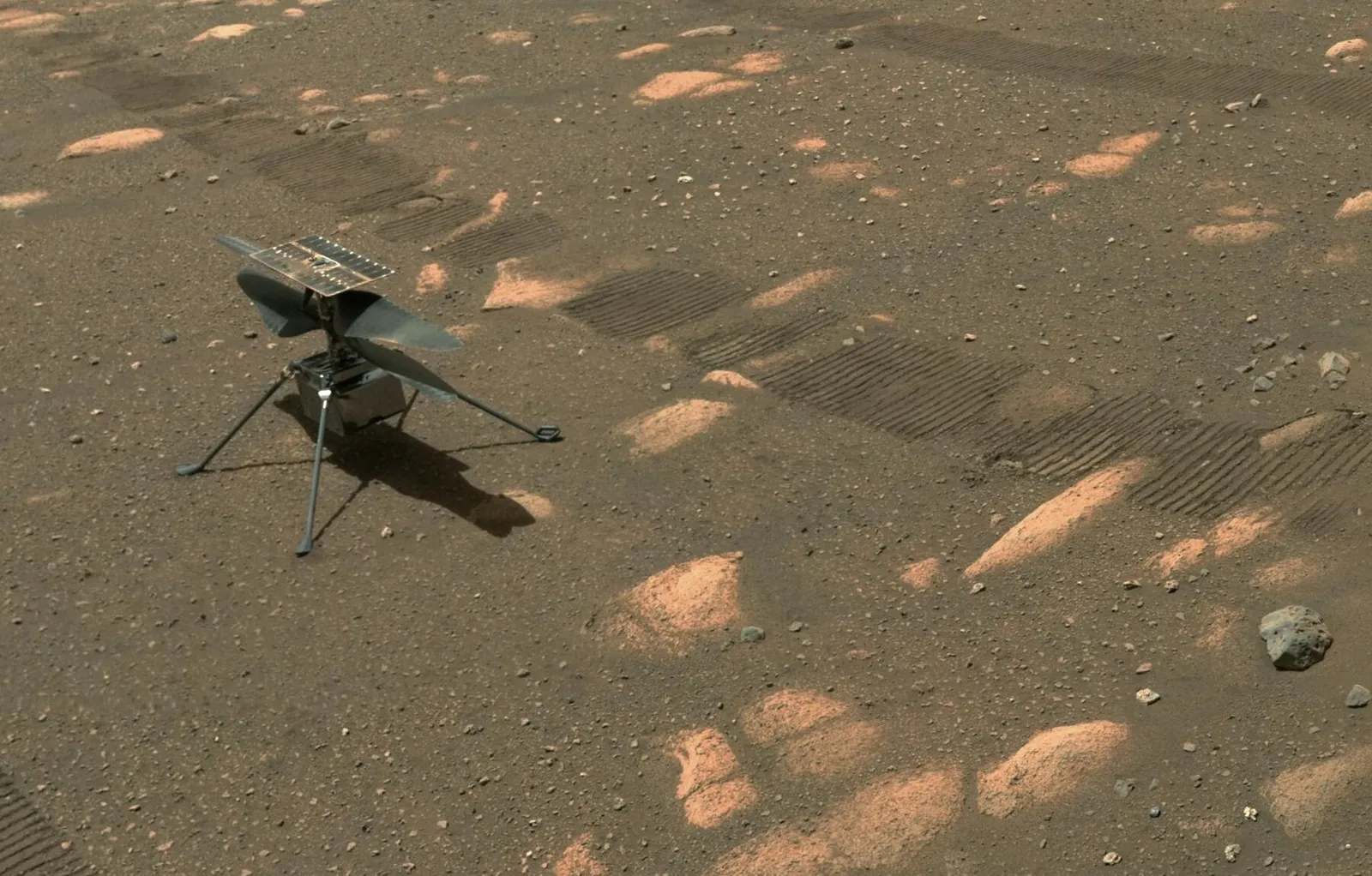
In 2021 Ingenuity, the small helicopter that reached Mars with the Perseverance rover, flew with Linux on a Snapdragon 801 processor, the same chip found in many phones a few years earlier. On 19 April 2021 it made the first controlled flight on another planet; in the end it flew 72 times.31
On home and office computers the numbers are small but growing. StatCounter, which measures web pages viewed, put Linux at 1.6% of desktops and laptops worldwide in September 2016 and at 4.5% in September 2026, plus 2.3% for ChromeOS; in Italy it went from 2.3% to 4.2%.25 In Steam's September 2026 survey Linux stood at 3.05%, a share that has moved around a lot from month to month this year.32
How widespread Linux is, by type of device
Who writes the kernel today
On 18 October 2026 Torvalds released Linux 7.3, after nine weeks of development: 18,765 changes signed by 3,021 developers, 807 of them contributing for the first time. According to LWN, the publication that has kept the kernel's statistics for years, the cycle broke almost every record.33 A new version comes out roughly every two months.
Most of the people writing the code are paid by companies that use Linux. For version 7.2, released on 17 August, LWN identified 249 employers: at the top Intel with 9.2% of the changes, Google with 7.3%, Red Hat with 5.3% and AMD with 5%, while 4.5% came from people contributing on their own.33 Competing companies work on the same code because each gains more by sharing the common base than by rebuilding it alone.
Since December 2025 Rust, a language that avoids whole families of memory errors typical of C, is no longer an experiment in the kernel: Miguel Ojeda, who leads the project, wrote that "Rust is here to stay".34 Then there is artificial intelligence. In version 7.2, changes declared as written with an AI assistant numbered 1,111, under 7%, against 301 in the version before, and LWN thinks the real figure is much higher.33 What this means for the people who have to check all this code I described in If AI writes the code, who checks it?
The question of people remains. The kernel is split among more than a hundred maintainers, the people responsible for each part, and many have worked on it for decades. "It is absolutely true that kernel maintainers are aging," Torvalds said in 2024. In January 2026 the project wrote down what happens if whoever runs the main repository can no longer do so: within 72 hours a discussion opens with the attendees of the latest Maintainers Summit.35
Europe and Italy: choosing your own tools
For a public administration free software means freedom of choice: reading the code that handles citizens' data, changing supplier without starting from scratch, reusing a program another body has already paid for. In Europe this idea also has a political name, digital sovereignty.
Schleswig-Holstein, the German state whose capital is Kiel, decided in April 2024 to move the tools of the roughly 30,000 people in its administration to free software, from LibreOffice all the way to Linux. "Ensuring digital sovereignty is at least as important as energy sovereignty," said its digital minister, Dirk Schrödter. On 19 September 2026 the state announced that the State Chancellery works on Linux: more than 200 people, with about twenty workstations still on Windows for specialist programs.36
In France the Gendarmerie has used its own version of Ubuntu for years: in 2018 it had 73,351 workstations on Linux and 8,180 on Windows.37 On 8 April 2026 DINUM, the interministerial digital directorate, announced that it is moving to Linux workstations and asked every ministry for a plan, by autumn 2026, to reduce dependence on suppliers from outside Europe.38 Lyon began replacing Microsoft programs with OnlyOffice and Linux in June 2025.39 In Denmark the Ministry of Digitalisation moved to LibreOffice; the move to Linux, first reported by the press, was denied.40
It has not always gone well. Munich had moved about 18,500 workstations to LiMux, a Linux prepared by the city; in November 2017 the city council decided to return to Windows, at an estimated cost of 86.1 million euros over six years.41 The lesson I draw is that a migration holds when it has a stable political choice, training and compatible programs behind it. In 2020 the new city majority nonetheless adopted the principle of "public money, public code".41
In Italy the rule has existed for years. Article 68 of the Digital Administration Code requires public bodies, before buying a program, to compare the available options, free software included; proprietary software can be chosen only if the comparison shows, with reasons, that it is impossible to use a program already available in the public sector or a suitable free solution. Article 69 requires bodies that have had a program developed to publish its code under an open licence, so that others can reuse it.42 On 22 July 2026 the Developers Italia catalogue listed more than 500 programs and more than 8,500 administrations reusing software.43
Since 2005 the Italian-language schools of South Tyrol have used FUSS, a Debian-based distribution: 4,500 PCs and 64 servers in about 80 schools, 1,900 teachers and 16,000 students, who can have the same programs at home for free. Since 2020 the SchoolSwap project has given more than 850 students a refurbished PC running FUSS.44 In 2015 the Ministry of Defence began moving more than 100,000 workstations to LibreOffice, with estimated savings of 26 to 29 million euros.45 I wrote about dependence on platforms in Who holds the keys?: free software is one of the most concrete ways to keep a copy of them.
Public administrations and free software, some cases
| Who | Since | What | Where it stands |
|---|---|---|---|
| French Gendarmerie | 2008 | Ubuntu on workstations | 73,351 PCs on Linux in 2018 |
| Italian schools in South Tyrol | 2005 | FUSS, based on Debian | 4,500 PCs in about 80 schools |
| City of Munich | 2006 | LiMux | Return to Windows decided in 2017 |
| Italian Ministry of Defence | 2015 | LibreOffice | Target of over 100,000 workstations |
| Schleswig-Holstein | 2024 | LibreOffice, then Linux | State Chancellery on Linux since September 2026 |
| City of Lyon | 2025 | OnlyOffice and Linux | Gradual replacement |
| Danish Ministry of Digitalisation | 2025 | LibreOffice | The move to Linux was denied |
| DINUM, France | 2026 | Linux workstations | Ministry plans due by autumn 2026 |
Linux Day, from 2001 to today
Before 2001 there had been many meetings and install parties, almost always local. The first national Linux Day, on 1 December 2001, brought together about forty groups: seminars, demonstrations and, in some towns, the chance to bring your own computer and have Linux installed for free by volunteers.46 Back then that meant partitioning the disk by hand and hunting for drivers for the graphics or network card, and having someone beside you who had done it before made all the difference.
Since 2006 Linux Day has been held on a Saturday in late October. It grew fast: 118 towns in 2007, 135 in 2010, the peak. Then the numbers fell, down to 58 events in 2019; in 2020 the pandemic took it online only, and in 2021 there were 20 in-person venues. Since then it has recovered: 52 venues in 2024, 51 in 2025, 57 this year.46
Linux Day: towns or venues per edition
I think part of the decline has a positive explanation: installing Linux today is much simpler, and help can be found online in minutes. Linux Day has changed its nature. The guidelines require free entry and no promotion of proprietary programs, and suggest talks, stalls, machines where people can try Linux and help installing it from USB sticks; they also invite organisers to set up a permanent LUG where there is none.47
This year's programme shows it well. At the Politecnico di Milano it runs from 9 am to 7 pm with talks and debates; in Rome, at Tor Vergata, the day is devoted to robotics; in Sulmona, alongside the install party, there are talks on running artificial intelligence on your own computer, on AI agents and on Linux at school.48 The national press release talks about privacy, security and schools, and reminds administrations, schools included, that they must consider free solutions first, as Article 68 of the Digital Administration Code requires.2
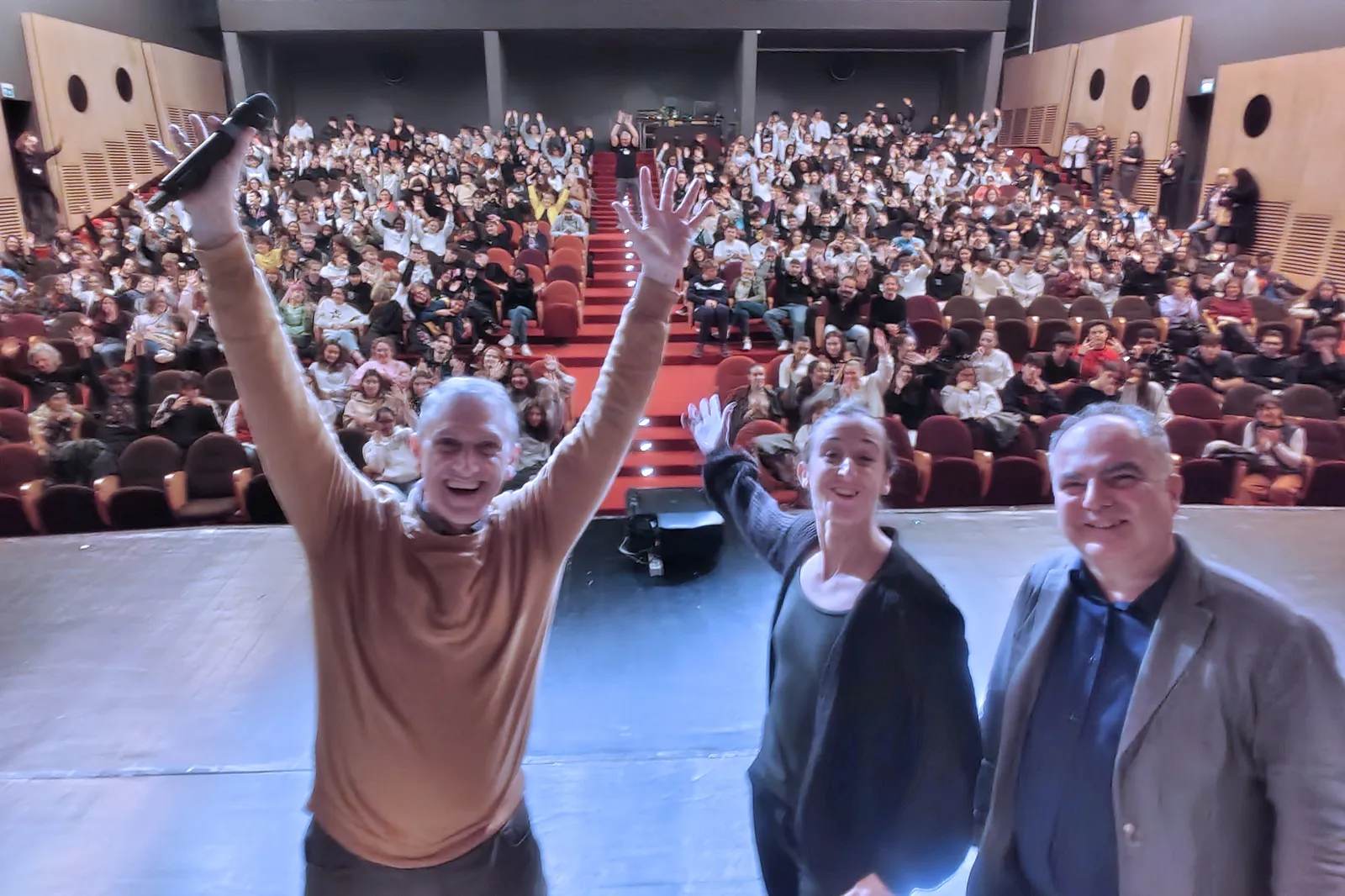
For people who work in technology, Linux Day has been, and still is, something rare: a place where you learn for free from people who know more, where people who have just started talk to people who have used Linux for thirty years, with nothing to buy at the end.
What I think: a question of freedom
I have used Linux on my personal devices for 25 years. Today I work mostly on a Mac, partly because since Mac OS X the system has had a terminal like Linux's: macOS is not Linux, it is a Unix system with BSD roots, but the command line and the tools are very similar. And I have an old iMac on which I installed Linux in place of macOS. I say this to make clear where I am speaking from. I am firmly on the side of free software, and I think it matters more today than it did in 1991.
The reason is freedom, in the most concrete sense. With a free program a student can open the code of a real operating system and understand how it works, as Torvalds did with Minix. A company can fix a defect without waiting for the supplier. A town council can know what the software handling its citizens' data does, and change it if it does not suit them. A school can give its pupils the same programs to use at home, for free and legally. None of them has to ask anyone's permission, or hope that a supplier will not change its mind about prices or terms. Thirty-five years of the kernel show that thousands of people, including people from competing companies, can build together something everyone can trust precisely because everyone can check it.
It is also a question of value. In 2024 three researchers at Harvard Business School estimated that the most widely used open source software is worth 8.8 trillion dollars to the people who use it, and that without it companies would have to spend 3.5 times more on software.49 The estimate rests on strong assumptions, but it gives the order of magnitude of how much shared work holds up the digital economy. Those who draw value from it should give some back: code, their developers' time, money for the foundations that maintain the projects.
Artificial intelligence makes all this more pressing. The supercomputers on which models are trained run Linux, every one of them. The question Stallman asked in 1983 now applies to AI: who can study a model, change it, run it on their own computers? In October 2024 the Open Source Initiative published a definition of open source AI that takes up the same freedoms and requires the code, the parameters and enough information about the training data.50 Many models called open share only their parameters. That Linux Day in Sulmona teaches people to run AI on their own computer seems to me the natural continuation of the install parties of 2001.
And there is how long things last. A free system can be maintained for as long as someone needs it, even after the manufacturer has stopped caring. For schools and public administration this means spending on skills and support rather than licences, and leaving those who come next tools they can reuse: that is the spirit of Articles 68 and 69 of the Digital Administration Code, which deserve to be applied with more conviction.
The limits are well known: some professional programs and some games still do not run on Linux, the share on personal computers is small, the maintainers are getting older. These are open building sites and the work is moving: Proton brings a growing share of Windows games to Linux, the kernel has given itself a continuity plan, and 807 people signed their first contribution in the latest version.
An old PC and a USB stick: how to start
On 14 October 2025 Microsoft stopped updating Windows 10. People with a PC that cannot move to Windows 11 can sign up for extended security updates, free in the European Economic Area with a Microsoft account; in June 2026 Microsoft moved the end of the consumer programme from 13 October 2026 to 12 October 2027.51 In September 2026 Windows 10 was still on 27.8% of Windows computers worldwide and 28.6% in Italy.25 In 2023 Canalys estimated that about 240 million PCs could not install Windows 11, many of which could keep working for years.52 Throwing them away follows the logic I wrote about in Fast tech: when technology becomes disposable.
Linux can keep many of them in service. The End of 10 campaign, backed among others by Debian, Fedora, GNOME and KDE, collects instructions and a list of places to find help.53
- TryFrom a USB stick, without touching the computerDownload a distribution designed for beginners, such as Linux Mint, Ubuntu or Fedora, copy it to a USB stick and start the PC from there. The disk stays as it is.
- ReuseA second life for an old PCBack up your data, install Linux in place of the old system and, if the machine is not powerful, choose a light desktop such as Xfce.
- LearnWith a child or a classAn old laptop is enough to see what a terminal is. Schools can start from distributions made for teaching, such as FUSS, which can be downloaded freely.
- AskAt Linux Day and in the LUGsOn 24 October and then all year round, LUG volunteers help with installing and setting up. End of 10 lists other places to find help.
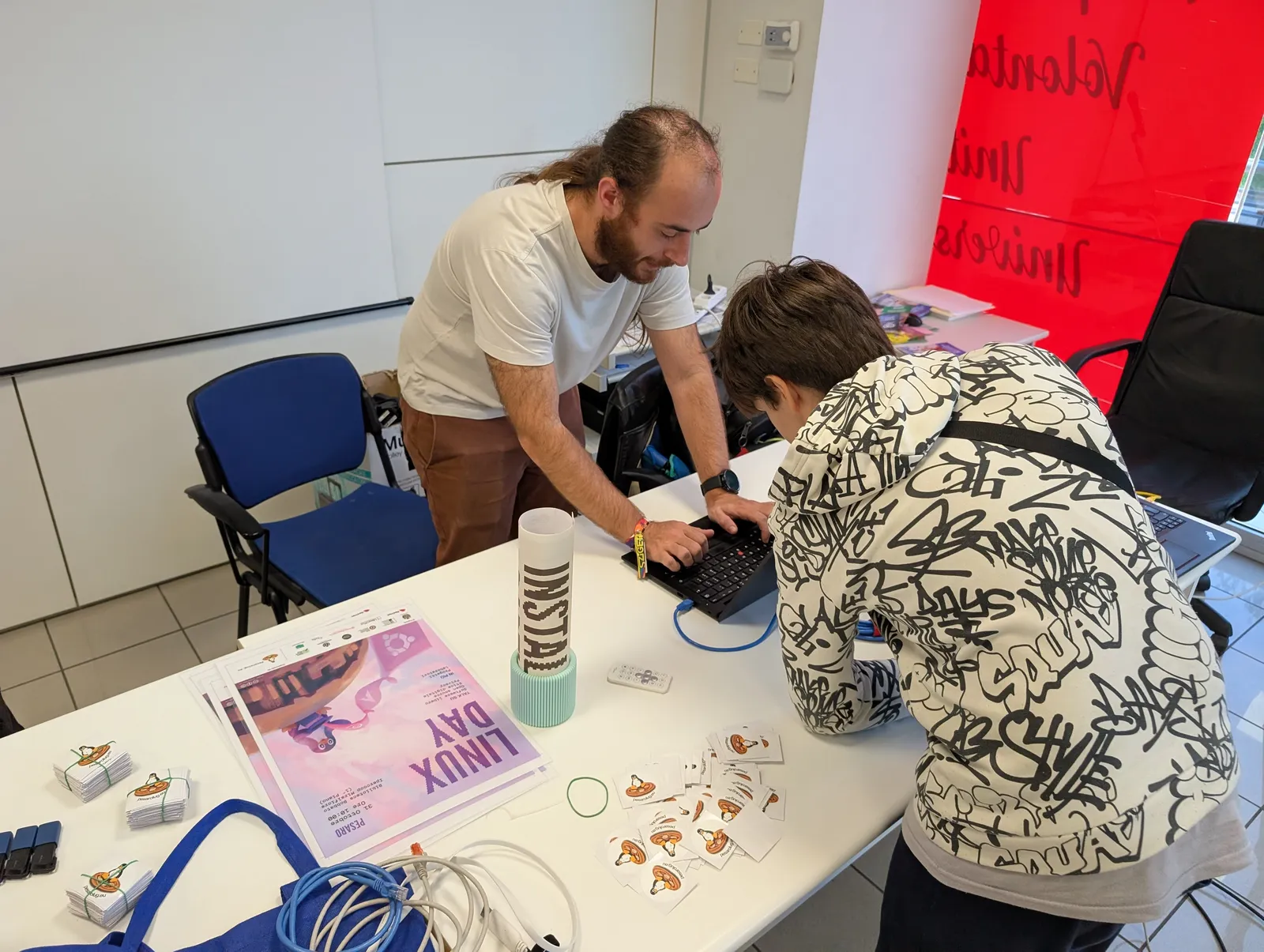
The events of 24 October are listed on linuxday.it, town by town, with times, addresses and organisers. Entry is free everywhere except at three events hosted by trade fairs, in Catania, Genoa and Rome.2 Anyone who wants Linux installed on their own laptop can bring it along, after backing up their data.