
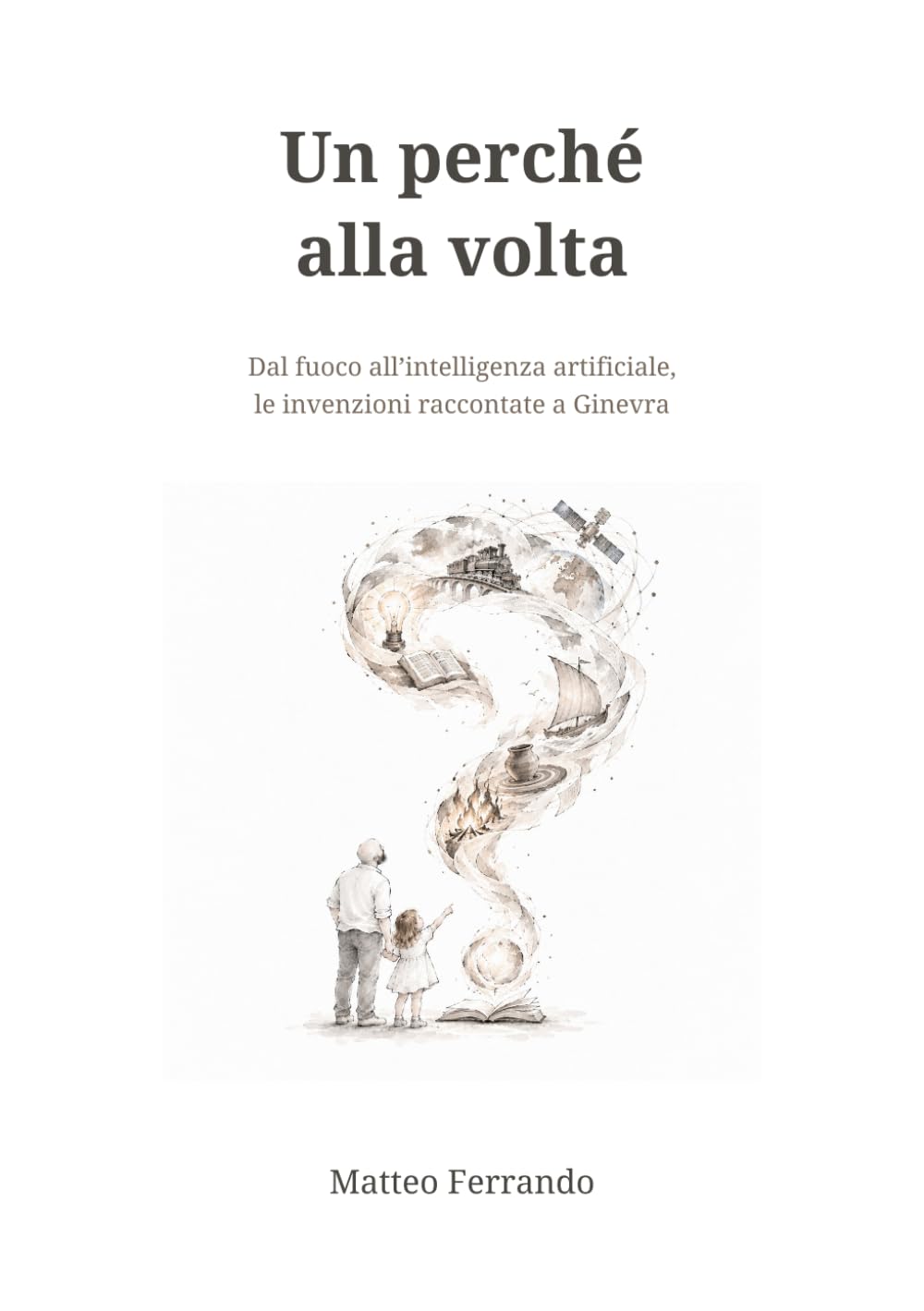
Un perché alla volta
One why at a time. From fire to artificial intelligence, inventions told to Ginevra.
It all started with my daughter’s favourite word: “Why?” Out of it came twelve chapters that begin with a scene at home and travel back through the history of great inventions, from fire to the wheel, from printing to electricity, all the way to machines that talk. A book on two levels, to read together.
Why I wrote it
One Sunday morning Ginevra, aged three, discovered the word “why” and never let go of it. To one of her questions I ended up answering “because that’s how it is”. I work in technology and artificial intelligence, and yet I could not explain to my daughter where the things she uses every day come from.
I gave myself a rule: “everything I write in this book must be explainable to Ginevra. If I can’t manage it, it means I haven’t understood it well enough.”
Ginevra was born after machines had learned to talk, and she will not remember a time without artificial intelligence. I wanted her to know that behind every object there are people, problems, ideas and failed attempts. And that she, too, could one day invent something.
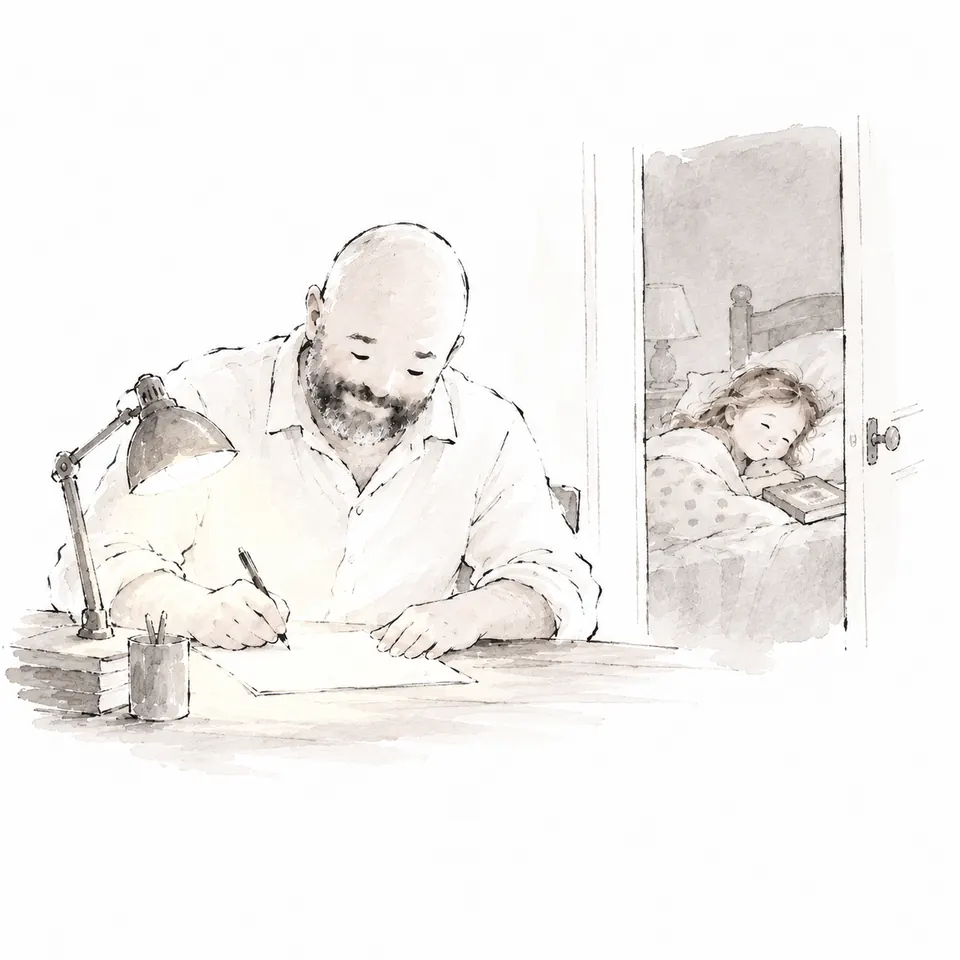
Two readers, one book
- For Ginevra
At the start of every chapter, a single page with short words and a refrain: “Then someone had an idea…”. It takes a minute to read, before bed, and can be reread a hundred times.
- For grown-ups
The rest of the chapter tells the real story: the people, the mistakes, the coincidences, the hidden price of every invention. For parents, grandparents, teachers, and anyone who has wondered how we got here.
Inside the book
- PrologueWhy?
The most powerful word in the world, and the difference between an invention and an innovation.
- Part oneTaming
- FireWhy does it get dark?
From a blackout and a candle to the first hearth: fire was not invented, it was tamed.
- FarmingWhere does food come from?
From a supermarket packet of pasta back twelve thousand years, by way of Strampelli’s wheat.
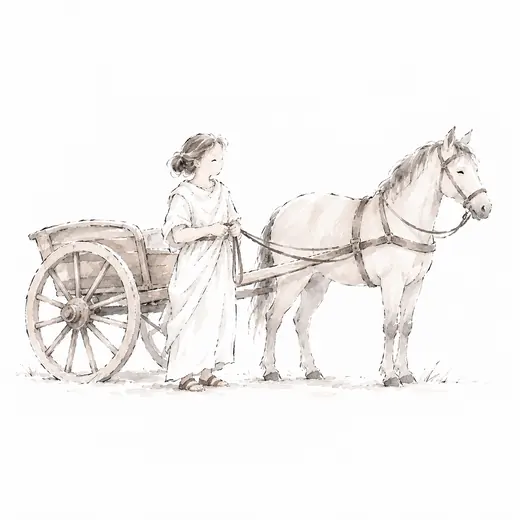
- The wheelWhy is the wheel round?
A late invention that only works inside a system. And a suitcase that waited millennia for its wheels.
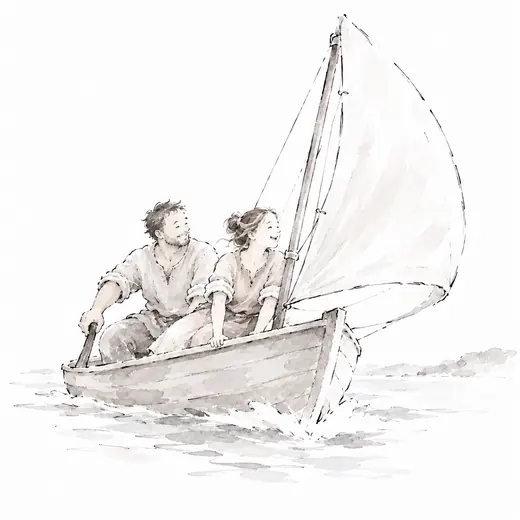
- NavigationCan you go to the other side of the sea?
Prehistoric canoes, Polynesian navigators, compass and chronometer, down to the internet cables under the oceans.
- Part twoConnecting
- WritingWhat does it say?
Born for counting, it became a memory that lives outside our heads.
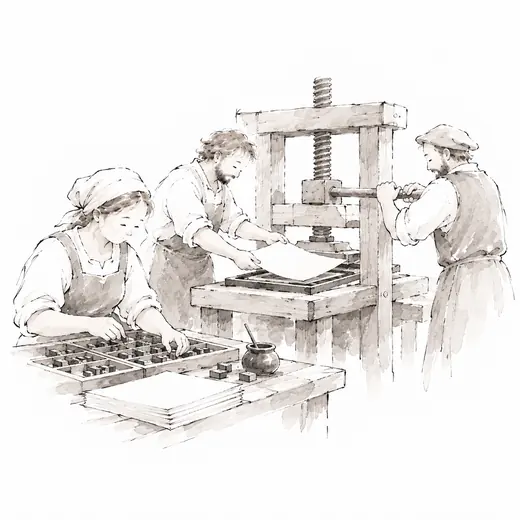
- PrintingWho made the books?
From Gutenberg to Wikipedia: when copying is cheap, the problem becomes choosing whom to trust.
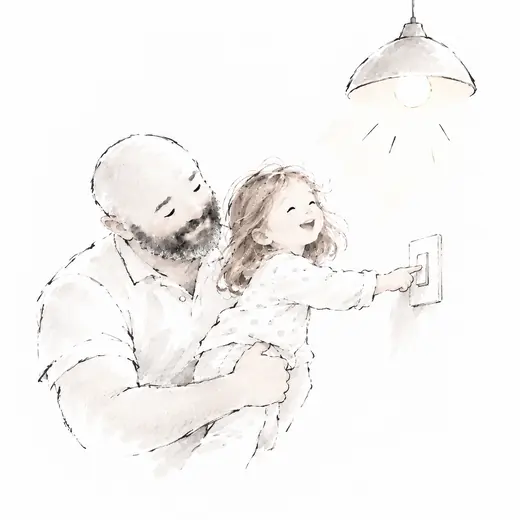
- ElectricityWhy does the light come on?
Volta, Faraday, Edison and La Scala lit up in 1883: behind a click, many forgotten people.
- From telephone to internetCan I talk to Grandma?
The telegraph, Meucci, the first ARPANET message and a Sunday video call.
- Part threeLearning
- Inventions that protectWhy do I have to wear the life jacket?
Life jackets, vaccines, seat belts: the best protections are the ones you do not see.
- The engineWho makes the machines go?
Coal, steam, factories and twelve seconds of flight at Kitty Hawk. Who pays the price of transitions?
- The computerDoes the computer think?
From Ada Lovelace to Turing, from ENIAC to the Olivetti Programma 101: machines that do what we say.
- Artificial intelligenceDaddy, who are you talking to?
Dartmouth, AlphaGo, ChatGPT. What learning machines can do, how much they consume, what is left to us.
- And at the endTo carry the book in your pocket
- SummaryThe laws of innovation
The whole book in a few sentences.
- EpilogueAnd you, what idea will you have?
A letter to Ginevra, to be opened at eighteen.
- AppendixFor grown-ups
Ten tips for answering “why?”.
One morning, in the kitchen, I was making coffee and talking to my phone at the same time. I was asking an artificial intelligence assistant to summarise some documents for a meeting. It answered in its calm voice, I asked more questions, it answered again.
Ginevra was sitting in her high chair with a biscuit in her hand. She listened to us for a while, serious. Then she asked me: “Daddy, who are you talking to?”
I stopped. It was the simplest of questions, and I did not know how to answer.
“A computer.”
“The computer talks?”
“Yes. That it does.”
“Like Grandma in the phone?”
“No. Grandma is a person. This is a computer that has learned to talk.”
“Who taught it?”
I thought of every possible answer. The engineers. The data. Billions of pages written by people. In the end I told her the thing closest to the truth I could find in simple words: “It learned from lots and lots of texts: books, pages and other examples written by people.”
She looked at the phone with respect. Then she said: “So can it read my book?”
Yes, I told her. Probably yes. But it doesn’t know what it’s like when I read it to her at night.
From chapter 12, “Daddy, who are you talking to?”, translated from the Italian
The laws of innovation
At the end of the prologue and of every chapter there is a law of innovation. They are not laws in the sense of physics: they are regularities, things that have happened so often in history that they have become almost predictable. Knowing them does not let you predict the future, but it helps you look at it with less naive eyes. All the laws, plus the five that run through everything →
- Every innovation begins with a question. Whoever stops asking “why?” also stops inventing.
- Nothing is invented from nothing: we tame what already exists. The greatest innovations come from learning to use a force that was already there, like fire, wind, wheat, the wolf.
- Every innovation has a hidden price. Often it is paid by someone who did not choose, and often, once it has begun, there is no turning back.
- Brilliant ideas look obvious only afterwards. Innovation is often not discovering something new, but combining two old things in a way that can become useful and widespread, like the wheel and the suitcase.
- Innovation begins where comfort ends. To find out what lies on the other side, someone has to accept leaving the shore.
- No invention stays what it was born for. The first Mesopotamian writing recorded goods and accounts, ARPANET connected a few research computers, text messages became far more popular than many expected.
- When copying is cheap, the world changes. And the problem is no longer finding information, but choosing which to trust.
- Nobody invents alone. Behind every famous name there are many hands, many ideas and many attempts that history forgets.
- The best technology brings distant people closer. But if we are not careful, the same technology can push away those who are close.
- The best protections can go unnoticed: when they work, they prevent the worst from happening. Some even help us become able to do without them.
- Every machine also changes the person who uses it. How a technology transforms people’s lives does not depend only on the technology, but on the choices we make about how to use it.
- Machines do what we say, not what we mean. There is always a gap between the two, and in that gap mistakes are born.
- Machines can learn from examples and help us explore questions. But every idea leaves a footprint, and the task of choosing the right questions remains ours.
The illustrations
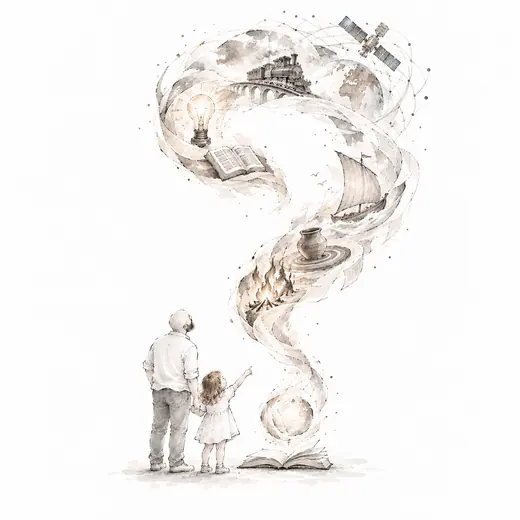
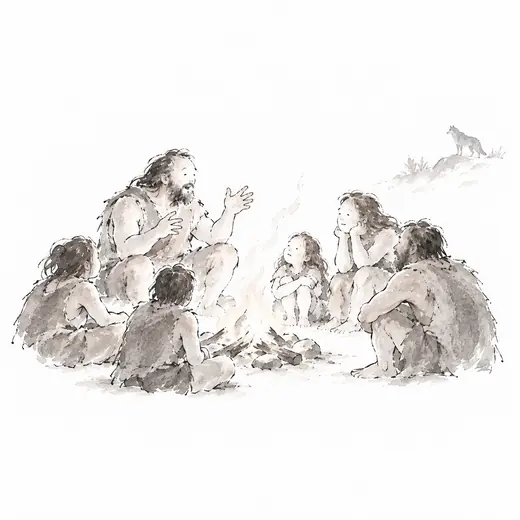
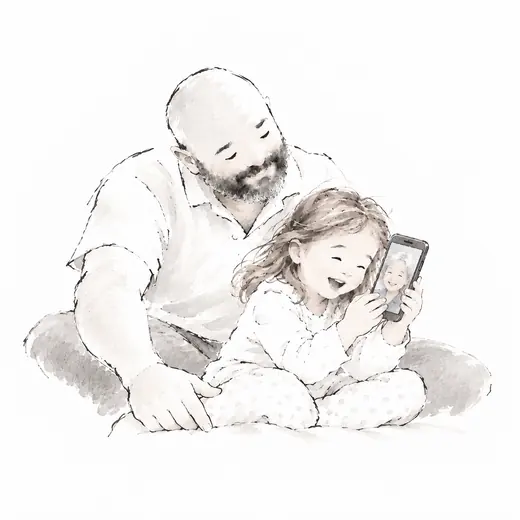
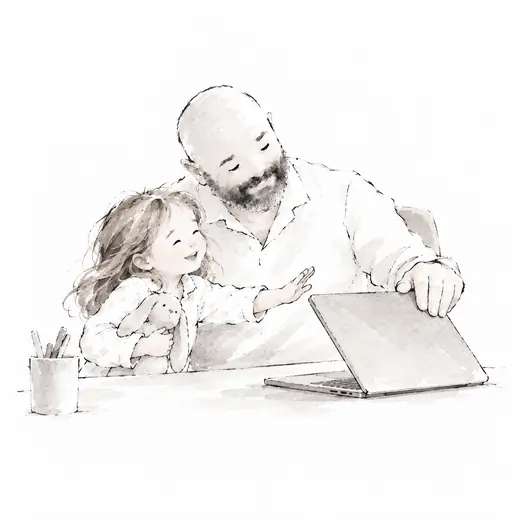
Every chapter comes with watercolours that follow Ginevra and her dad through the history of inventions.
Ten tips for answering “why?”
The appendix is for grown-ups. It gathers what I have learned, often by getting it wrong.
- Take questions seriously.
- Say “I don’t know” without shame.
- Look it up together.
- Start from what the child already knows.
- Use your hands, not just words.
- Tell stories, not just facts.
- Answer with another question.
- Don’t be afraid of difficult questions.
- Accept being tired.
- Keep a diary of questions.
Curiosity is a superpower. You have it. Don’t let anyone take it away from you.
From the epilogue, “And you, what idea will you have?” (translated)